

If you’re preparing your German student visa application, you’ve probably already come across the term “blocked account in Germany” (or Sperrkonto, if the embassy website threw some German at you). It trips up almost every applicant at first, not because it’s complicated, but because nobody tells you clearly which provider to pick or what you’re actually paying for.
We work with students opening blocked accounts every week, so we’re going to walk you through exactly what a blocked account is, how much you need in 2026, how the process actually works, and how the three names you’ll keep running into, Expatrio, Fintiba, and Coracle, compare once you look past the marketing pages and into what real customers are currently experiencing.
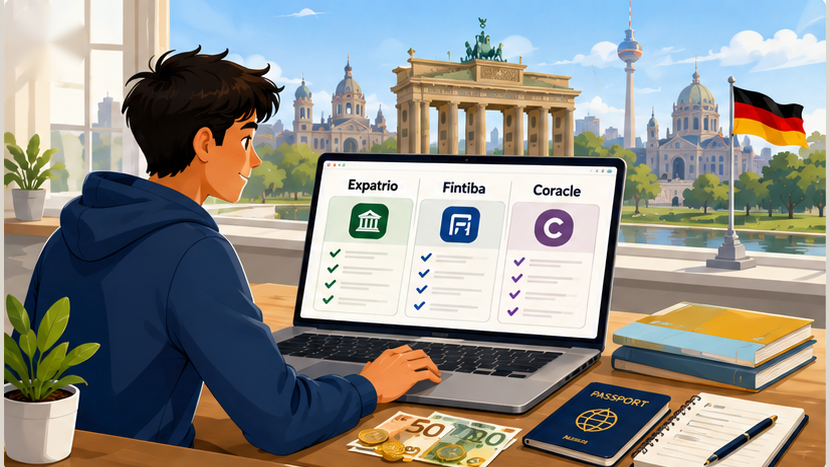
What Is a Blocked Account and Why Do You Need One?
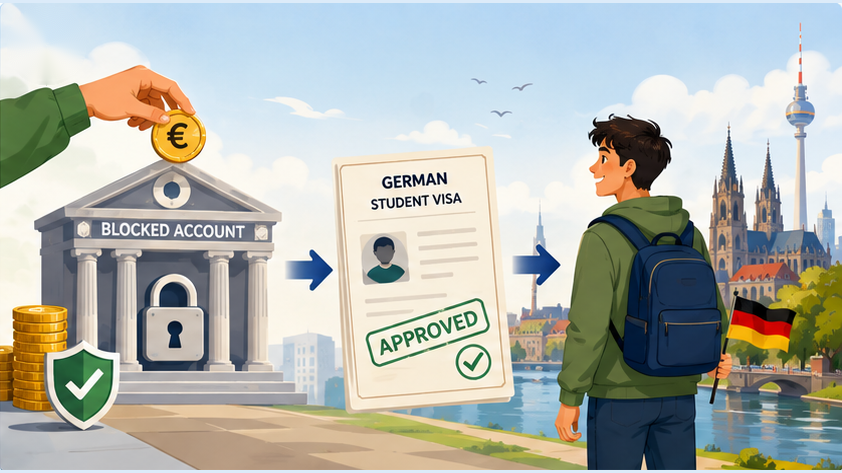
A blocked account is a special type of German bank account that proves to the embassy you can financially support yourself during your studies. You deposit a set amount before your visa appointment, and once you arrive in Germany, the funds are released to you in fixed monthly installments rather than all at once.
For almost every non-EU student, this is one of the mandatory pieces of your visa file, right alongside your admission letter and health insurance proof. Skip it or get the numbers wrong, and it’s one of the most common reasons applications get delayed. It’s also one of those things that feels intimidating the first time, mostly because there are three providers all claiming to be the fastest, cheapest, and most trusted, and the honest answer is that it depends on your situation.
How Much Money Do You Need in 2026 for Blocked Account in Germany?
The required amount hasn’t changed since last year. In 2026, you need to deposit €11,904 in total, which works out to €992 per month. This figure is set by the German government based on the BAföG living-cost rate and applies no matter which provider you choose, it’s not something Expatrio, Fintiba, or Coracle can raise or lower.
If you’re applying for the Opportunity Card (Chancenkarte) instead of a standard student visa, the requirement is higher, at €1,091 per month.
Most providers also ask for a small buffer on top of the required amount, usually somewhere between €60 and €80, to absorb currency conversion or transfer fees if you’re wiring money internationally. Any leftover buffer is typically returned to you with your first monthly payout.
How the Blocked Account Process Actually Works
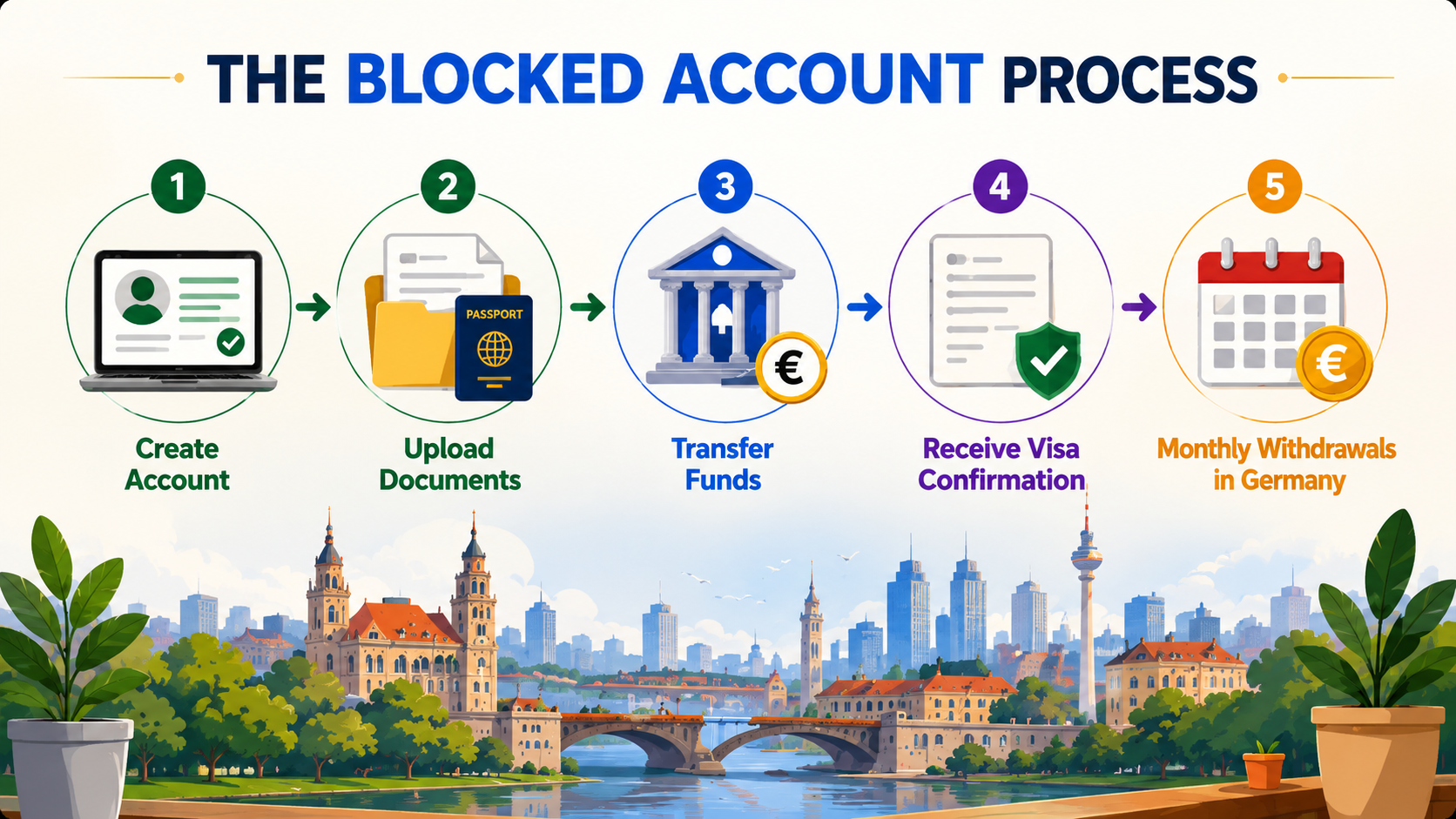
Regardless of which provider you pick, the general steps look roughly the same:
- Create an account online with your chosen provider and upload your passport, admission letter, and ID.
- Transfer the required funds (€11,904, plus any buffer fee) via international bank transfer, SWIFT, or a supported payment method like Wise.
- Receive your blocking confirmation letter (Sperrbestätigung), which you submit with your visa application.
- Travel to Germany and open a local current account (some providers, like Expatrio, bundle this in automatically).
- Activate your blocked account by linking it to your German current account, so your monthly €992 can start being paid out.
The part that trips people up most isn’t the process itself, it’s the timing. Funds need to actually clear before your provider will issue the confirmation letter, and international transfers can take longer than people expect, especially from certain countries. Build in a buffer of at least one to two weeks before your visa appointment.
Quick Comparison: Expatrio vs Fintiba vs Coracle
Comparing providers is the easiest way to choose the best Blocked Account in Germany.
| Feature | Expatrio | Fintiba | Coracle |
| Setup Fee | €119 | €159 | €99 (for existing accounts) |
| Monthly Fee | €9 | €9.90 | €0 |
| First-Year Cost | ~€227 | ~€277.80 | ~€99 |
| Processing Time | 1-5 business days | ~24 hours to a few days | N/A – not open to new customers |
| New Applications Open? | Yes | Yes | No – paused since Aug 2025 |
| Existing Customers Serviced? | Yes | Yes | Yes, officially – but see notes below |
| Health Insurance | Optional add-on | Optional add-on | Optional add-on |
| Free German Bank Account | Yes | No | No |
| Best For | Most students | Speed and minors | N/A right now |
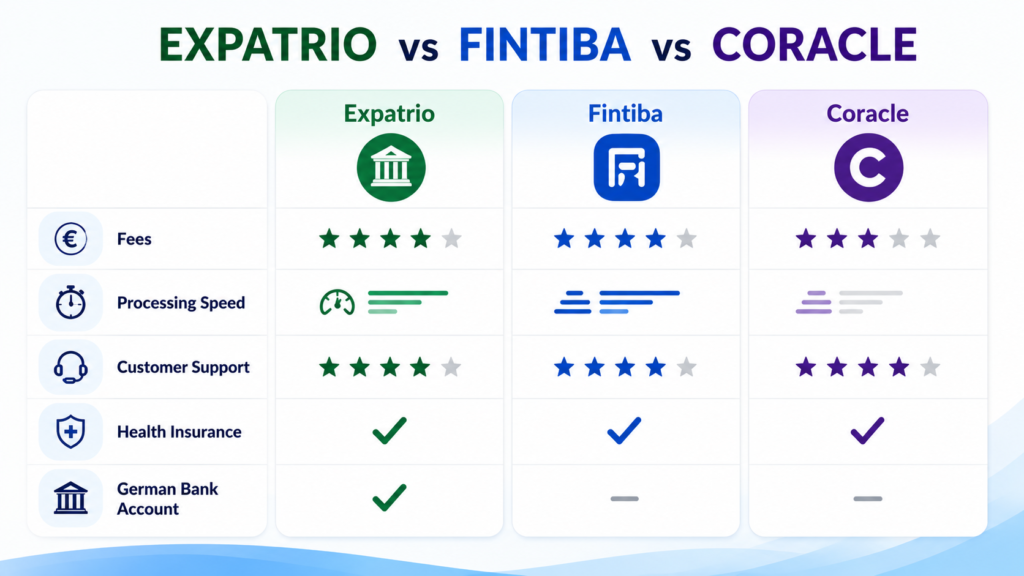
A quick note on Expatrio: it raised its prices on July 7, 2026, from €89 + €5/month to €119 + €9/month. If you’re reading an older comparison online, the numbers are probably outdated, this table reflects current pricing.
Expatrio
Pros
- Includes a free connected German bank account, so your monthly payouts land somewhere you can actually use them
- Fully online setup, usually confirmed within a few business days, and customer reviews consistently mention same-day or next-day confirmations for straightforward applications
- Bundles blocked account, health insurance, and travel insurance into one package if you want it
- Full refund of service fees if your visa is rejected
- Customer support is generally reported as fast and responsive, including on weekends
Cons
- Prices went up in July 2026, so it’s no longer the cheapest option
- The bundled Value Package can feel like more than you need if you just want a standalone blocked account
- Like any large provider, a portion of reviews mention slower processing for applicants from certain countries, usually due to extra compliance checks
Best For
Students who want one platform handling the blocked account, bank account, and insurance together, without juggling three separate providers.
AccessFuture also works directly with a dedicated Expatrio representative, so if any of our students run into an issue with their account, we can step in and get it resolved quickly instead of leaving you stuck in a support queue.
Fintiba
Pros
- One of the fastest confirmation times in the market, especially if you pay the setup fee by credit card
- Accepts applicants under 18, which most competitors don’t
- Long-established provider with a physical office in Frankfurt, and reviewers who’ve visited in person consistently mention helpful, friendly staff
Cons
- The most expensive of the three, by a clear margin
- No free German bank account included, you’ll need to open one separately once you land
- Recent reviews show a real pattern of complaints around monthly payout delays and slow support response times, particularly when a case needs manual review or a refund is involved. Several 2026 reviews describe waiting weeks for a payout or refund to be resolved
- Support can be harder to reach by phone during high-demand periods around visa season
Best For
Students with a visa appointment coming up fast, or anyone applying as a minor. Just build in extra buffer time and keep records of every communication, in case you need to follow up on a payout.
Coracle
Coracle needs a more careful explanation than a simple pros-and-cons list, because its situation is genuinely different from the other two right now.
Current Status: Not Accepting New Applications
Coracle paused all new blocked account applications in August 2025 while it rebuilds its banking infrastructure. As of this writing, no reopening date has been announced, and its own help centre still lists new applications as paused. If you’re a new applicant, you simply cannot open a Coracle blocked account at the moment, regardless of what an older blog post or comparison site might tell you.
What Happens If You’re an Existing Coracle Customer?
Officially, Coracle states that existing customers are “not affected” by the pause and can continue using their account, including extending it for further visa periods. That’s the policy on paper.
In practice, however, recent customer reviews tell a more complicated story. Over the past few months, a meaningful number of Coracle customers, including some trying to close their account and get a refund after their visa was approved or rejected, have reported significant delays, unclear communication, and difficulty getting a straight answer from support about the status of their funds. This doesn’t mean every existing customer has had a bad experience, but it’s a pattern worth knowing about if you already hold a Coracle account and are counting on a smooth refund or closure.
Pros
- The lowest fees on paper for those who already have an account, €99 setup with no ongoing monthly charge
- Simple product, no bundled add-ons to navigate
Cons
- Not accepting new blocked account applications, and no confirmed reopening date
- Existing customers are officially still serviced, but recent reviews point to real delays with refunds and support responsiveness
- Even once new applications reopen, you won’t get a bundled current account the way you do with Expatrio
Right now: nobody applying for a new blocked account, simply because it isn’t possible. If you already have a Coracle account, it should keep functioning as normal, but it’s worth requesting things like refunds or extensions earlier than you think you need to, and keeping every email as a paper trail.
When Should You Actually Open Your Blocked Account?
A good rule of thumb is to start the process at least four to six weeks before your visa appointment. That gives you enough time to:
- Transfer funds and account for any delays with international banks
- Receive your blocking confirmation letter
- Deal with any follow-up document requests, which are common if you’re applying from a country flagged for extra compliance checks
If your appointment is genuinely close, under two weeks away, Fintiba’s faster confirmation times may be worth the higher price. If you have more breathing room, Expatrio’s lower cost and bundled bank account usually make more sense.

Our Recommendation
The best Blocked Account in Germany depends on your budget and timeline. For most students right now, Expatrio is the practical choice, it’s fully digital, comes with a free connected bank account, and its fees, while higher than before, are still lower than Fintiba’s. Customer sentiment also currently leans more positive on processing speed and support responsiveness.
Fintiba is worth the extra cost if your visa appointment is close and you need the fastest possible confirmation, or if you’re under 18, just go in aware that its recent reviews flag payout and support delays more often than Expatrio’s.
Coracle is not an option for new applicants at the moment. If you already hold a Coracle account, it should continue to function, but budget extra time for anything involving a refund or closure, based on what recent customers have reported.
Whichever provider you choose, double-check the current fees and required amount directly on their website before transferring anything, providers do update pricing and policies during the year, as Expatrio and Coracle both have.
FAQs
Is a blocked account mandatory for a German student visa?
Yes. Almost every non-EU applicant needs one to prove sufficient funds, unless you have a full scholarship or another accepted form of financial proof, like a Declaration of Commitment from a German resident.
How much do I need to deposit in 2026?
€11,904 for the year, or €992 per month. This is set by the German government and is the same regardless of which provider you use.
Can I get my money back if my visa is rejected?
Generally, yes. Expatrio and Fintiba both refund their service fees on a rejected visa, though transfer fees may not be refundable. Coracle also has a refund process for existing customers, but recent reviews suggest it can take longer than expected, follow up proactively if you’re in this situation.
Which Blocked Account in Germany provider is the cheapest?
Between the two providers actually accepting new applications, Expatrio currently costs less than Fintiba over the first year.
Can I still open a new account with Coracle?
No. Coracle paused new blocked account applications in August 2025 and hasn’t announced a reopening date. If you already have an existing Coracle account, it should continue to function as normal.
How long does it take to open a blocked account?
It varies by provider and by your country of origin, since some applicants face extra compliance checks. Fintiba tends to be fastest for straightforward cases (often within 24 hours), while Expatrio typically takes one to five business days.
Do I need a blocked account if I’m receiving a scholarship?
Usually not, if your scholarship fully covers your living costs and you can provide official proof of it. Check with your specific visa office, since requirements can vary slightly by consulate.
Blocked accounts are one of the most straightforward parts of your visa file once you know which provider fits your timeline, the real risk is picking one blind, or waiting on a provider that isn’t taking applications. A little research now saves you a scramble two weeks before your appointment.
If you’d rather not manage all of this alone, AccessFuture can guide you through choosing the right provider, opening your account, and handling any hiccups along the way, get in touch with our team whenever you’re ready.